Your One-Stop Shop for Engineering, Electromechanical & Construction Tools


Your One-Stop Shop for Engineering, Electromechanical & Construction Tools
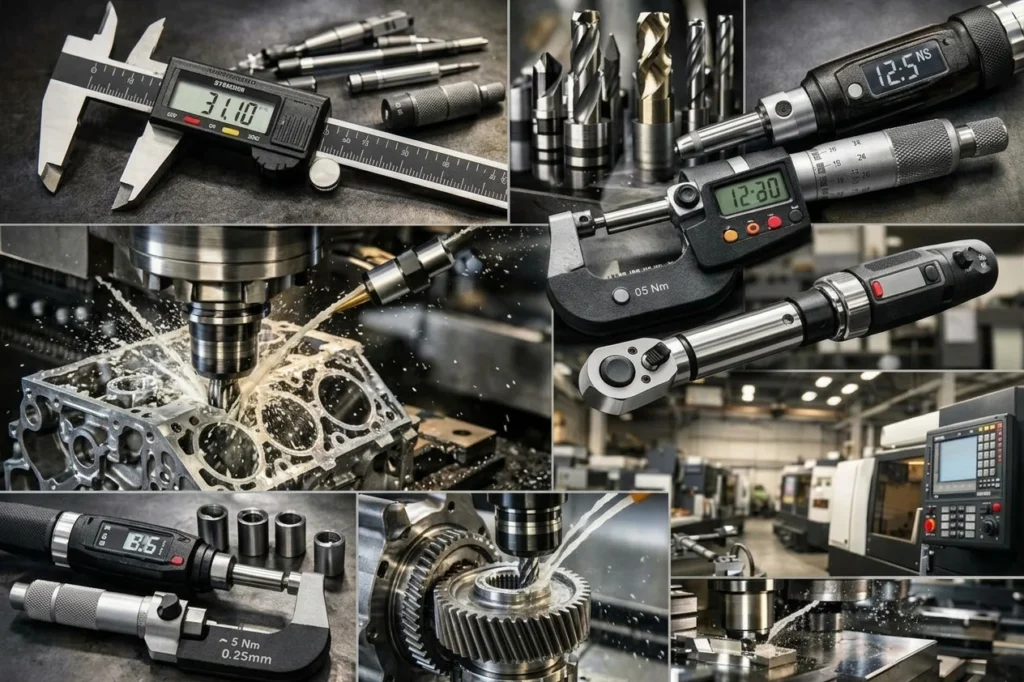
This guide explains how UAE manufacturers can choose a dependable precision tools supplier. It covers why accurate measuring tools protect quality, what to check in a supplier, a simple five point scorecard, and the buying mistakes that lead to rework, failed inspections and delays.
Choosing the right precision tools supplier in the UAE is essential for maintaining measurement accuracy, meeting quality standards and avoiding costly production errors. Whether you run a workshop, manufacturing facility or engineering business, the tools you buy must match your measurement requirements and come with reliable technical support.
Before placing an order, compare suppliers based on their product range, calibration documentation, local availability and after sales service. This guide covers the key checks to help you choose a reliable precision tools supplier in the UAE and make an informed purchasing decision.
Precision tools control dimensional accuracy at every stage of production, from incoming material checks to final inspection. In UAE fabrication, engineering and oil and gas work, tolerances are tight and clients ask for proof. A reliable measuring tool prevents rework, rejected batches and delays before they reach the customer.
Picture a Dubai workshop cutting flanges for a piping job. If a micrometer drifts and nobody notices, every bore after that point is slightly off. The error repeats quietly until final inspection, when the whole lot is in question.
Heat adds another layer. Dimensional measurement is referenced to 20 degrees Celsius, yet many UAE workshops run much warmer in summer. Metal expands, and a tool with poor build quality reads inconsistently across a shift.
A reliable precision tools supplier stocks a wide measuring range, provides traceable calibration certificates, keeps common items available locally and supports you after the sale. Price matters, but a supplier who cannot prove accuracy or respond quickly costs more through downtime than any discount saves.
Most facilities need more than one tool type. A useful range includes calipers, micrometers, dial gauges, height gauges, depth gauges, bore gauges and thread gauges, plus cutting and threading tools for the shop floor.
Buying from one source also keeps your records tidy. If you are comparing precision measuring tools Dubai UAE, check whether the full set for one inspection station is available together.
A measuring tool is only as good as the proof behind it. Ask for a calibration certificate that matches the serial number of the tool you receive, with a date and the reference standard used.
Laboratories that issue these certificates commonly work to ISO/IEC 17025, the international standard for testing and calibration competence. If a supplier cannot explain where calibration traces back to, treat that as a warning sign.
A micrometer that is out for repair for three weeks stalls an inspection line. Suppliers with local stock can replace a faulty unit quickly and often keep spare anvils, batteries and accessories on hand.
Support also means advice. When choosing a precision tools supplier in the UAE, look for technical guidance as part of the service, not an added bonus. A good supplier will ask what you measure, which tolerances you need to maintain and what working conditions the tool must handle before recommending a suitable model.
Score each supplier from 1 to 5 on range, calibration proof, stock availability, technical advice and after sales support. Add the totals and compare. A supplier scoring below 18 out of 25 usually has a gap that will surface during a rush order or a client audit.
This scorecard provides a practical way to evaluate precision tools suppliers in the UAE before making a purchase. Keep it with your approved vendor file so future buyers can repeat the same checks and follow a consistent selection process.
| Criteria | What to Ask | Red Flag |
|---|---|---|
| Range | Can one source cover measuring, cutting and threading needs? | Only a few generic items listed |
| Calibration Proof | Is the certificate tied to the serial number? | Generic certificate with no tool details |
| Stock Availability | Which items ship from Dubai this week? | Every order needs import lead time |
| Technical Advice | Will they ask about your tolerance and application? | Quotes without any questions |
| After-Sales Support | Who handles repairs and recalibration? | No clear contact once the invoice is paid |
Not sure which tools are right for your inspection needs? Explore our precision and measuring tools range to find the right equipment for your measurement requirements and accuracy standards.
Buying precision tools based only on price can lead to inaccurate measurements and rejected parts. Other common mistakes include overlooking calibration certificates, ignoring working conditions and purchasing tools without considering long-term inspection needs.
These issues are easier to prevent when you check the tool’s specifications and documentation before placing an order.
Accuracy on the shop floor starts with choosing a dependable supplier. A clear scorecard, proper calibration documentation and reliable local support help maintain consistent measurement quality, reduce rework and support long-term quality control. Choosing the right precision tools supplier in the UAE is an important step towards achieving these goals.
Al Sakeena Building Materials and Electricals Trading supports UAE builders, contractors and manufacturers with reliable tools and materials, and helps teams match the right precision instrument to the job.
Tell us what you measure and the tolerance you work to. Our team will recommend suitable precision and measuring tools, confirm availability and share a clear quote, so your inspection work runs without delays.
Precision measuring tools verify that parts meet specified dimensions and tolerances. Workshops use calipers, micrometers, gauges and height gauges during machining, assembly and final inspection. They help catch errors early, cut rework and give quality teams measurable evidence that products meet client requirements.
Most workshops recalibrate precision tools at least once a year, though the interval depends on how often the tool is used and how tight the tolerance is. Heavily used or dropped tools need earlier checks. Your quality system should define the schedule and record each result.
Ask whether the tools come with a serial matched calibration certificate, which items are in local stock and who handles repairs. Also confirm the resolution and accuracy range suit your tolerance. A supplier who answers these clearly is usually dependable after the sale too.
Discover guides on all hardware, building materials, and electrical products for your next project.