Your One-Stop Shop for Engineering, Electromechanical & Construction Tools


Your One-Stop Shop for Engineering, Electromechanical & Construction Tools
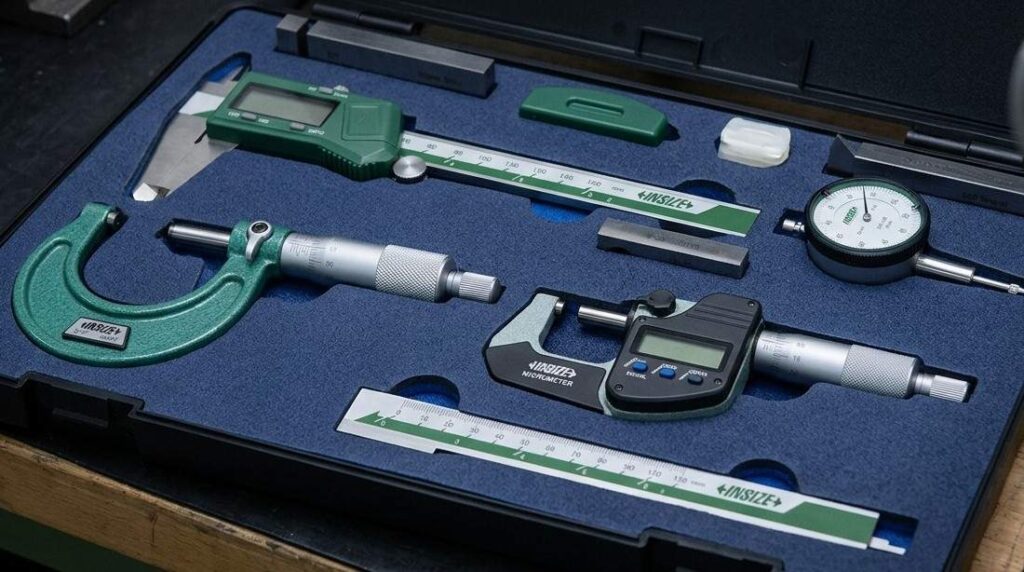
Yes, INSIZE measuring tools are reliable for beginners when each unit is verified on arrival. Stated accuracy on 150 mm digital calipers, about ±0.02 to ±0.03 mm, is finer than most new users can repeat. Check zero, test against a gauge block, and confirm the datasheet before first use.
Buying your first caliper or micrometer raises a fair question: can an affordable brand be trusted? INSIZE measuring tools sit between budget imports and premium Swiss or Japanese names.
INSIZE measuring instruments are precise tools, covering calipers, micrometers, gauges, and other precision measurement tools built for real workshop use. This guide gives a direct verdict, the tradeoffs, and a checklist you can apply on day one.
Yes, INSIZE measuring tools are accurate enough for beginners in most workshop, fabrication, and maintenance tasks. Typical 150 mm digital calipers specify accuracy near ±0.02 to ±0.03 mm, which is finer than a new user can consistently repeat. Always confirm exact figures on the model datasheet.
The bigger error source is usually the operator, not the instrument. Uneven jaw pressure, dirty measuring faces, and parallax on dial models add more error than the tool’s stated tolerance. Calipers built to ISO 13385-1 and micrometers built to ISO 3611 follow published metrological requirements, so check which standard a model claims.
Resolution is also not accurate. A display that reads to 0.01 mm shows finer steps than the tool can guarantee, so always compare the readout against the stated accuracy, not the last digit on the screen.
Beginners go wrong through technique, not tool quality, and the same errors appear on every brand of measuring instruments. The most frequent failures are skipping the zero check, over-tightening the jaws, and mistaking display resolution for real accuracy, and each adds an error that no instrument can correct.
Watch for these edge-case failure vectors:
Most of these failures are preventable with a simple routine. Wipe the faces, let the part reach room temperature, and apply light, consistent pressure. Beginners who build these habits early tend to see stable readings across every tool they own.
Run a five-point acceptance test on arrival: check zero, verify against a gauge block, repeat one reading five times, inspect the faces, and confirm the datasheet. This ten-minute routine catches most defects before a tool reaches a job, and it works for any brand.
Use this 5-Point Beginner Reliability Test:
Record the results in a simple log with the date, tool serial number, and readings. If any step fails, return the tool to the supplier rather than adjusting it yourself. A written record also gives you a baseline for later calibration checks.
Start with a 150 mm digital caliper and a 0-25 mm outside micrometer. Together they cover most beginner tasks, from general dimensions and depths to precise diameter checks.
Add dial indicators, height gauges, or other Insize Measuring Instruments once zeroing and repeatability feel routine, and browse the full INSIZE measuring tools category to compare ranges and models.
| Tool | Best For | Beginner Risk |
|---|---|---|
| Digital Caliper | General dimensions | Reading resolution as accuracy |
| Outside Micrometer | Precise diameters | Skipping the ratchet stop |
| Dial Caliper | Battery-free work | Parallax reading |
| Steel Rule | Quick checks | Coarse resolution |
Choose digital models first if reading a scale is new to you. A micrometer rewards patience, so practice with the ratchet stop until repeated readings of one part agree closely.
Yes, INSIZE measuring tools deliver dependable accuracy at a price that suits learners, provided you verify each unit and keep good technique. Pair them with the acceptance test above and scheduled calibration, and they will serve well beyond the learning curve.
Keep the buying decision practical. Match the tool’s range to your typical part size, choose the resolution your work requires, and budget for periodic calibration alongside the purchase price.
Choose the Right Precision Instruments for Your Work
Looking for reliable INSIZE precision instruments in UAE? Al Sakeena Building Materials and Electricals Trading can help you find the right calipers, micrometers, gauges, and measuring tools based on your required range, resolution, and accuracy. Get product details and expert guidance before placing your order.
Yes. Their stated accuracy exceeds what beginners can repeat, and datasheets make verification simple. Run the zero and gauge-block checks first.
Most workshops calibrate every 6 to 12 months, or sooner after a drop or heavy use. Regulated environments follow the interval set by their quality system.
Digital models are easier to read and zero, so they suit most beginners. Dial models avoid batteries but demand careful parallax control.
Discover guides on all hardware, building materials, and electrical products for your next project.