Your One-Stop Shop for Engineering, Electromechanical & Construction Tools


Your One-Stop Shop for Engineering, Electromechanical & Construction Tools
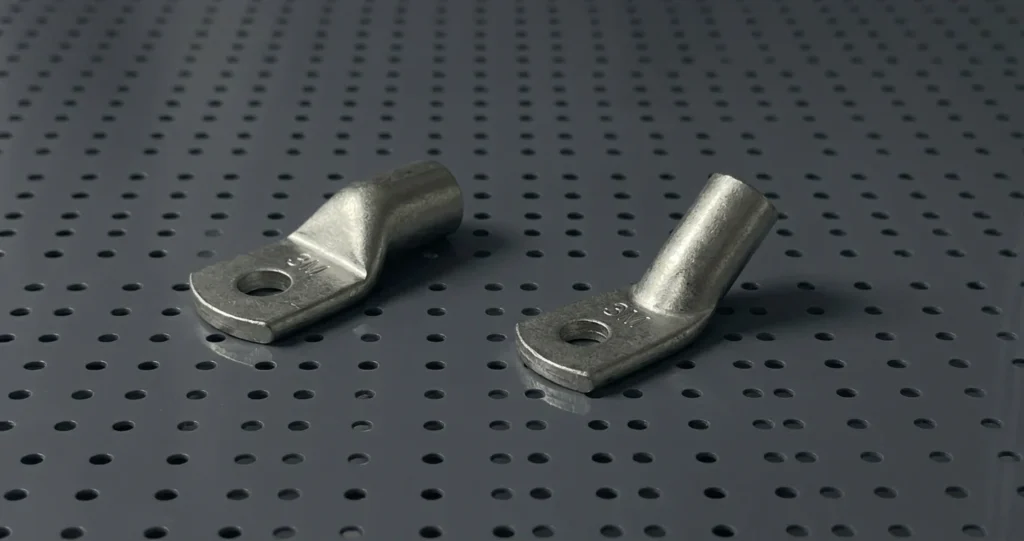
Cable lugs are metal connectors that join a cable to a terminal, busbar or device. This guide covers the main types by material, shape and fixing method, where each one is used, the benefits of a proper lug connection, and how to choose the right size and metal.
A loose cable end is one of the most common reasons for heat, voltage drop and tripped breakers. Cable lugs explained, types, usages, and benefits is a topic every electrician, panel builder and site engineer should understand before the next installation.
A lug looks like a small part, but it carries the full load of the circuit at the point where it joins the equipment. Get it right and the connection runs cool for years. Get it wrong and it becomes the weakest point in the system.
A cable lug is a metal connector fitted to the end of a cable so the cable can be bolted or inserted onto a terminal, busbar or device. It holds the conductor firmly, keeps contact resistance low and stops the strands from loosening under vibration or heat.
Every lug has two main parts. The barrel is the hollow section that takes the conductor, and the palm is the flat end with a hole for the stud or bolt. The barrel is crimped, soldered or clamped onto the cable, and the palm is fixed to the connection point.
Cable lugs are grouped by material, shape and fixing method. Copper, aluminium and bimetallic lugs cover the material choices. Ring, fork and pin lugs cover the shapes. Compression, mechanical and solder lugs cover how the lug is attached to the conductor.
Cable lugs are used wherever a conductor must be joined to equipment securely. That includes distribution panels, switchgear, transformers, motors, batteries, solar systems and control panels. The lug type changes with the current, the cable metal and the working environment.
Common applications include:
Cable lugs give a firm, low resistance connection between a conductor and its terminal. They reduce heat at the joint, protect against loose strands, speed up installation and make later maintenance easier. A correct lug also extends the life of the cable and the equipment it feeds.
The main benefits are easy to list:
Without a lug, bare strands pressed under a screw spread out and loosen. That is how hot spots start.
Choose a cable lug by matching the conductor metal, the cable cross section, the stud hole size and the working environment. The lug must also suit the crimping tool and meet recognised standards such as DIN 46235, EN 13600, IEC 61238 or UL 486A.
Run through this checklist before ordering:
If you are sourcing in bulk, work with a reliable cable lugs supplier who can confirm sizes, materials and standards before you place the order.
| Lug Type | Best For | Main Strength | Watch Out For |
|---|---|---|---|
| Copper | Power circuits | High conductivity | Higher cost |
| Aluminium | Aluminium cables | Light and economical | Oxidation |
| Bimetallic | Aluminium to copper joints | Prevents galvanic corrosion | Needs correct crimp die |
| Ring | Bolted terminals | Cannot slip off | Slower to remove |
| Fork | Maintenance panels | Quick fitting | Can loosen if vibration is high |
| Pin | Terminal blocks and PLCs | Neat and compact | Low current only |
Most lug failures come from installation errors, not from the lug itself. These are the ones that show up most often on site:
A quick torque check and a visual inspection after installation can prevent most of these.
Cable lugs may be small, but they decide whether a connection stays cool and secure or turns into a repeat fault. Knowing the material, shape and fixing method makes selection simple, and it is the core of cable lugs explained, types, usages, and benefits.
For genuine electrical supplies and guidance on choosing the right lug for your project, you can rely on Al Sakeena Building Materials and Electricals Trading. Our team can help you match the right lug to your cable, your load and your site conditions.
Not sure which cable lug type suits your project?
Share your cable size, conductor material and application, and our team will match you with the right lug type, material and standard. You get clear guidance and a written quote, so you can order with confidence.
Cable lugs connect electrical cables to terminals, busbars, switchgear, batteries and equipment. They give a secure, low resistance joint that prevents loose strands, overheating and voltage drop in both power and control circuits.
A ferrule is a small tube crimped on a wire end to stop fraying before it goes into a terminal block. A cable lug has a bolt hole and is used to fasten the conductor directly to a stud, busbar or device.
Use a bimetallic lug when an aluminium conductor connects to a copper busbar or terminal. The aluminium barrel and copper palm prevent galvanic corrosion, which can cause overheating and connection failure if the two metals touch directly.
Most power cable lugs are crimped with a suitable tool and die, which gives the strongest and most consistent joint. Mechanical lugs with set screws or shear bolts are an alternative, and soldering is used less often because it needs careful technique.
Discover guides on all hardware, building materials, and electrical products for your next project.